Timeframe: July 2018 – Present (4 developer conferences 2019–2023, year-round meetup ecosystem 2024–present)
See it live: REFACTR.TECH website · Join the meetup community · Watch on YouTube
Context
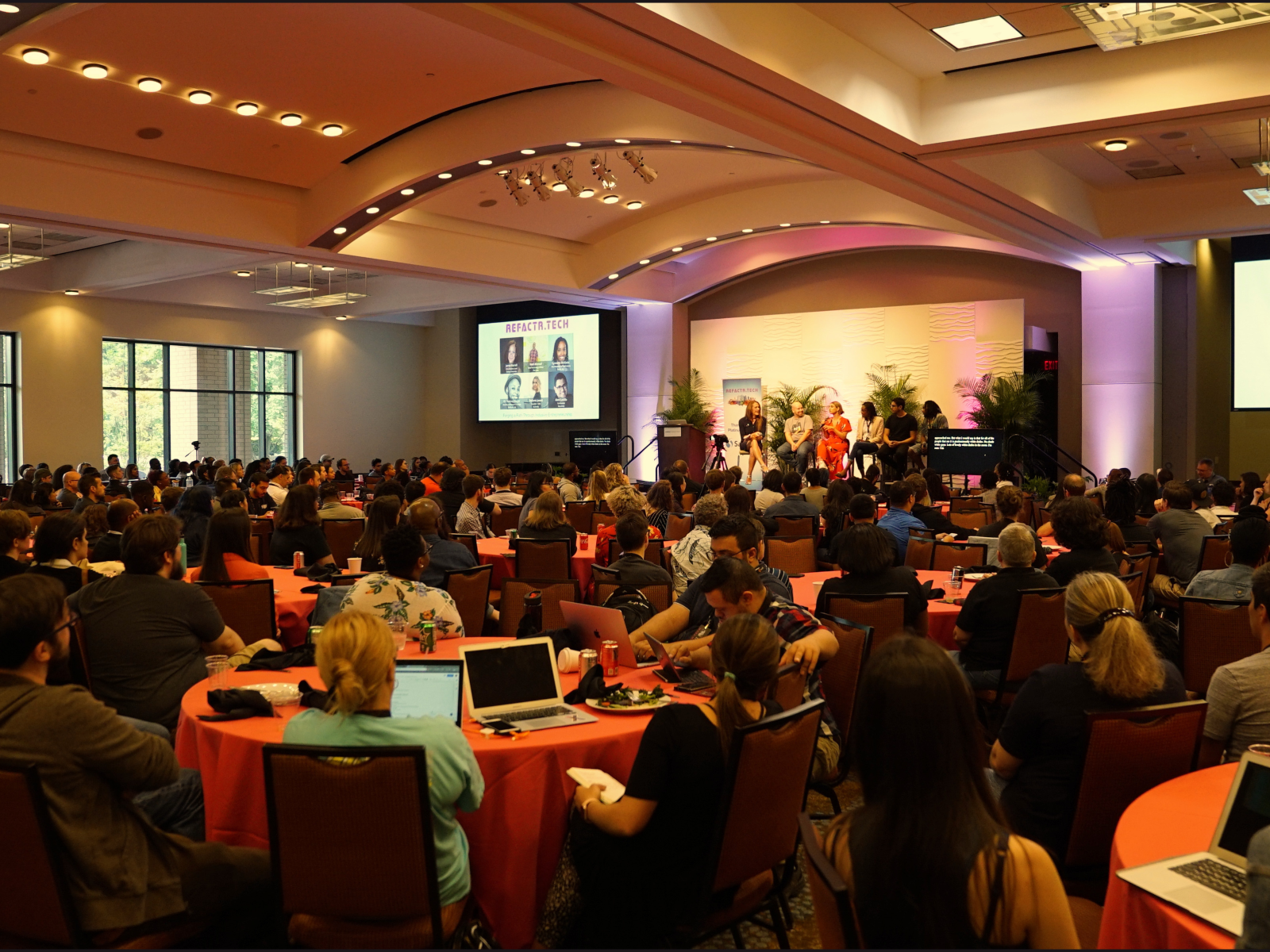
The gap REFACTR.TECH was built to fill was one our own prior work had surfaced. After several years building Women Who Code Atlanta, it was clear that the Atlanta tech ecosystem had multiple marginalized groups underserved by existing programming: nonbinary developers, men of color, LGBTQ+ engineers, and other underrepresented technologists. WWC Atlanta's events welcomed those audiences and our policy was explicitly inclusive of them, but the work itself was, by name and by design, primarily focused on women in tech. Other groups were included as guests at the table, not centered alongside women as co-equal audiences.
The brand reinforced that. Women Who Code carried a signal that was hard to read past from the outside: a developer who didn't identify as a woman had no clear way to know they were welcome, even when our policy and programming said they were. Inclusion-in-practice didn't override brand-perceived audience. That was the gap our own work had surfaced, and it was a gap WWC couldn't fully close from inside its own brand.
The broader Atlanta tech community had no developer conference whose brand was legible from the outside as a home for every underrepresented group in tech, not as an extension of any single one. National conferences existed, but they came with national-conference economics: high ticket prices, geographic friction, generic programming. Atlanta-based conferences with inclusion at the center existed, but they were either small workshop events or single-track meetups. There wasn't a multi-day, multi-track, technical-depth event built around the audience we wanted to serve.
REFACTR.TECH was the answer to that gap: a developer conference built from the ground up to be a serious technical event whose inclusion was unapologetic in who it programmed, platformed, and served, and whose brand made that inclusion legible to every marginalized group in tech, not just one.
Starting state
- A network of trusted organizers and speakers built through years of community work.
- A relationship-rich Atlanta tech ecosystem with sponsor and venue partners.
- Prior conference-running experience. Members of the founding team had run WeRISE Tech, the WWC Atlanta tech conference, in 2017 and 2018. As Hypepotamus later put it when WWC dissolved, WeRISE "helped lay the foundations for REFACTR.TECH." We entered year one with a real conference operating model, not a hypothesis about one.
- A partnership with Connect Events, the team behind many of the Southeast's and Texas's tech events, especially in Atlanta, who agreed to provide the operational logistics layer for REFACTR.TECH: ticketing system, payment processing for ticket and sponsor funds, and event-operations consulting.
- No conference infrastructure of our own. Every editorial and operational piece outside of what Connect Events covered (CFP, program committee, venue, sponsor agreements, AV, code of conduct enforcement, attendee experience) had to be built from scratch.
- A clear hypothesis that a paid technical conference with an inclusive operating model could be financially viable in Atlanta.
- Co-founder partnership with shared values, complementary skill sets, and aligned views on what the brand needed to stand for.
Goals & success metrics
The goals at founding were:
- Deliver a serious technical conference: multi-track, multi-day, with content that engineers respected and would travel to attend.
- Center inclusion in operating decisions: speaker lineup, attendee experience, sponsor relationships, code of conduct, accessibility.
- Be financially sustainable: strong enough sponsor and ticket economics to keep coming back year after year.
- Build a brand that could expand beyond the conference into a year-round community ecosystem.
Metrics tracked: ticket sales, sponsor renewal rate, speaker quality and diversity, attendee NPS, press coverage, and later year-round community size.
Scope & constraints
Scope: Co-founder of the brand and the conference. Owned program strategy, sponsorship operations (pricing, prospectus, pipeline, contracts, invoicing, collections), marketing, community, and post-event content. Also owned the brand itself: I created the REFACTR.TECH identity in 2019 and have owned it since, including the website, each edition's themed expression, and the promotional design pipeline (speaker cards, sponsor cards, badges, slides, social and motion assets) that every conference and, since 2024, every meetup runs through. Sold into my own network and all inbound leads, alongside two co-founders selling theirs. Co-led operating decisions with my two co-founders.
Operating partner: Connect Events provided the operational logistics layer (ticketing, payment processing, event-ops consulting), which freed us to focus on programming, sponsors, brand, community, and attendee experience.
Constraint: A founder-led operation with no parent organization, no fallback budget, and no inherited brand or editorial infrastructure outside of what Connect Events covered.
Constraint: Atlanta market. Strong potential audience but smaller than coastal tech hubs, meaning the economics had to work at a smaller scale than national-conference benchmarks.
Constraint: Inclusion-as-default raised the bar on every decision. A "good speaker" wasn't enough; the lineup as a whole had to reflect the community we said we were serving, every year.
External constraint: The pandemic interrupted in-person conference programming for two years, which reset the operating playbook for any in-person event brand.
Approach
The conference was built around four principles:
Programming integrity first. A great inclusive conference is, first, a great conference. Speaker selection went through a structured CFP and program committee, with the diversity of the lineup treated as a design constraint on the whole, not a quota applied to individual selections.
Sponsor relationships as partnerships. Sponsors weren't transactional logo placements. We curated partners whose recruiting goals aligned with our audience and whose values aligned with the brand, and we built recurring partner relationships across years.
Attendee experience as a programming surface. The hallway, the food, the code of conduct response, the after-hours programming: every touchpoint was treated as part of the product, not logistics.
Brand-as-platform. The conference was the flagship, but the brand was always intended to grow into a year-round ecosystem. Every conference reinforced a recognizable point of view that could carry into meetups, workshops, and content.
After the 2023 conference, the brand evolved into a recurring meetup program, starting with monthly virtual lunches and expanding into regular in-person meetups, turning the conference brand into a year-round community ecosystem.
The brand system
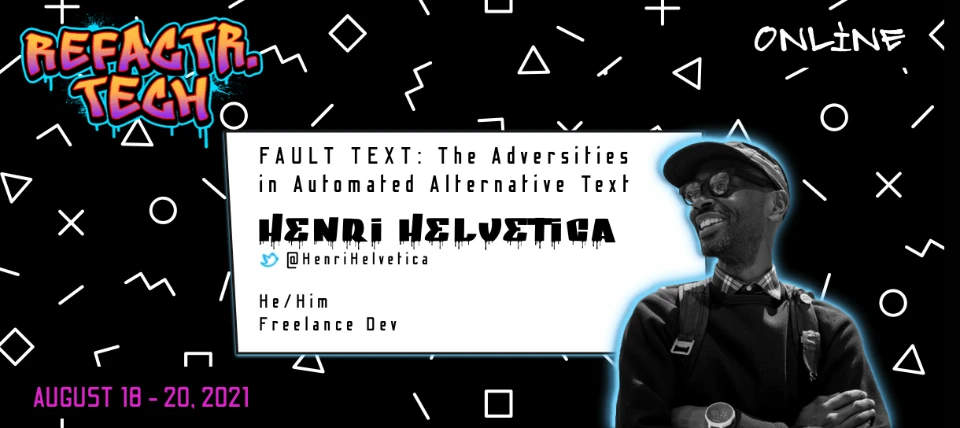
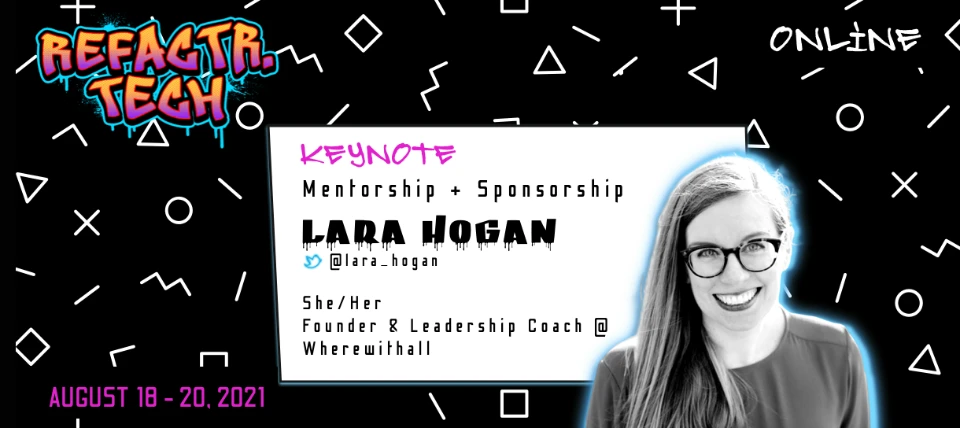
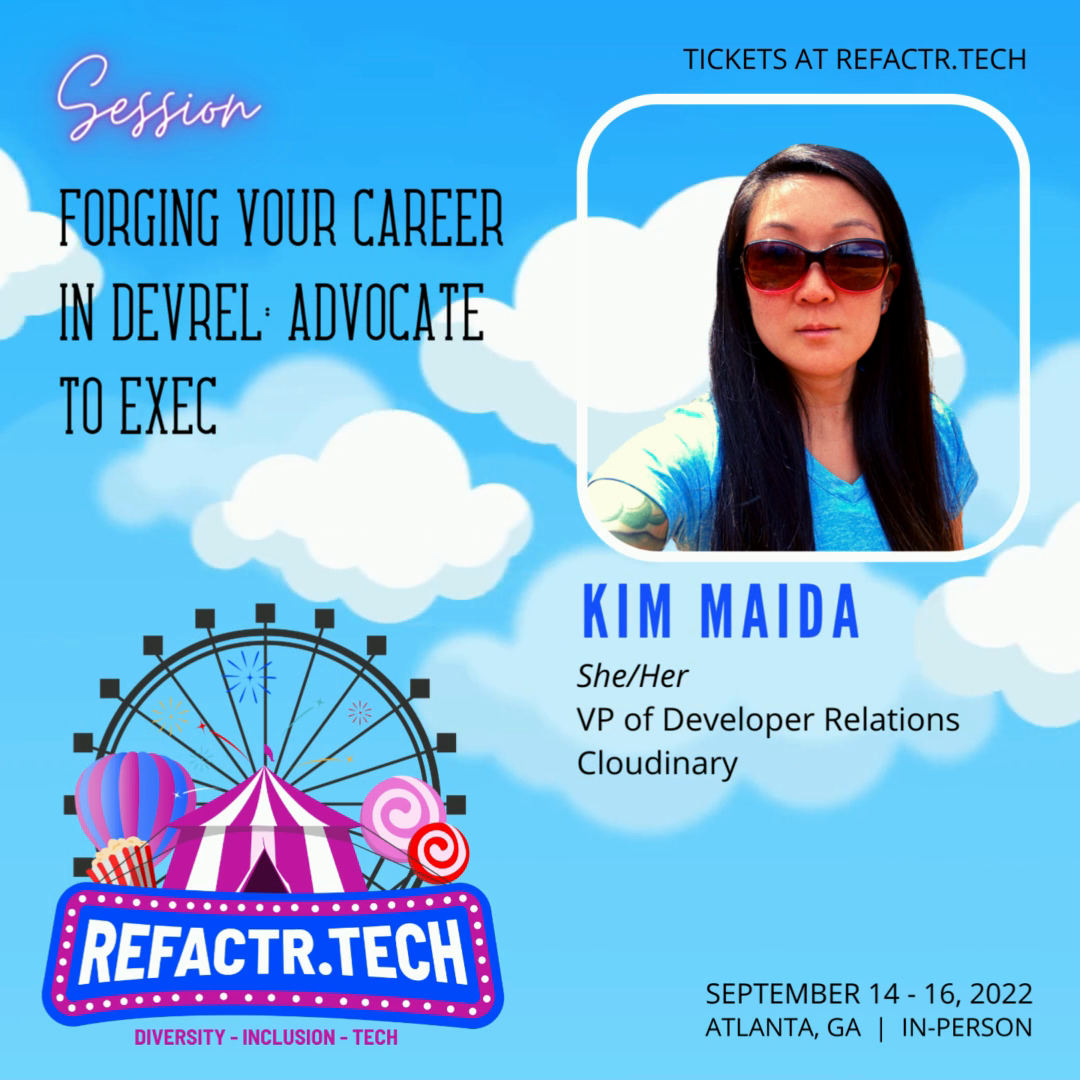
REFACTR.TECH is one wordmark with a different expression each edition. The team picks the theme; I design the expression. The rule that makes it a system rather than a set of graphics is simple: three things never move, everything else can.
What holds across every edition: the name set as one horizontal unit, REFACTR.TECH, dot included, never stacked or abbreviated. Magenta and purple carrying the identity, the only colors present in all four editions. And the DIVERSITY / INCLUSION / TECH tagline, always subordinate to the wordmark, with its treatment free to flex with the edition.
What varies: the ground, the letterforms, the ornament vocabulary and the secondary accent. Four editions, four completely different typefaces, same lockup geometry.
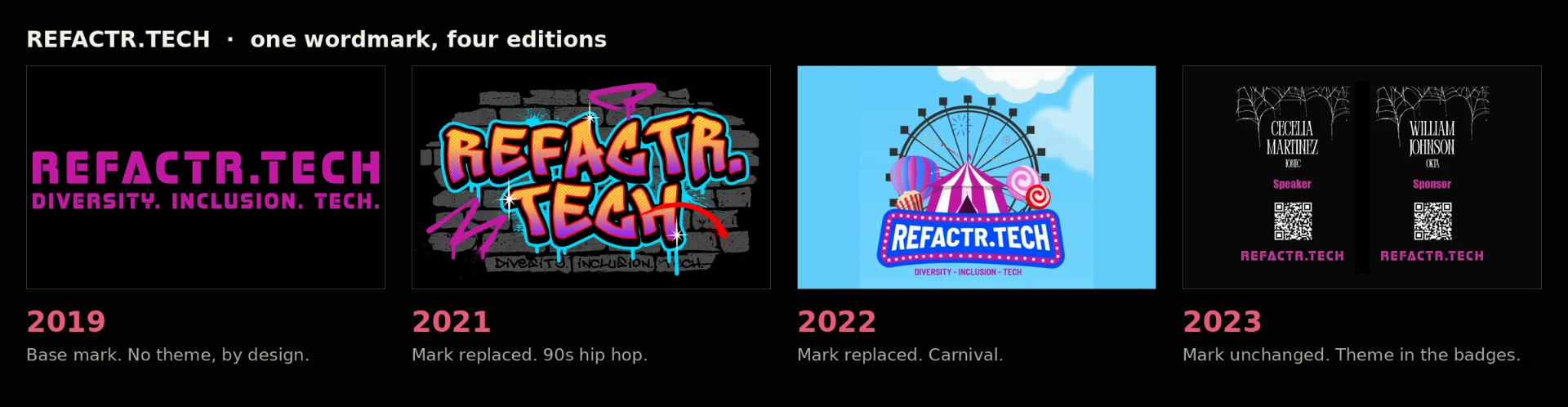
The one line I would keep from all of this: no edition shipped an expression it couldn't carry across the attendee experience. In 2019 that was because the brand was too new to vary. In 2023 it was because the venue and the budget wouldn't support it. Different reasons, same discipline.
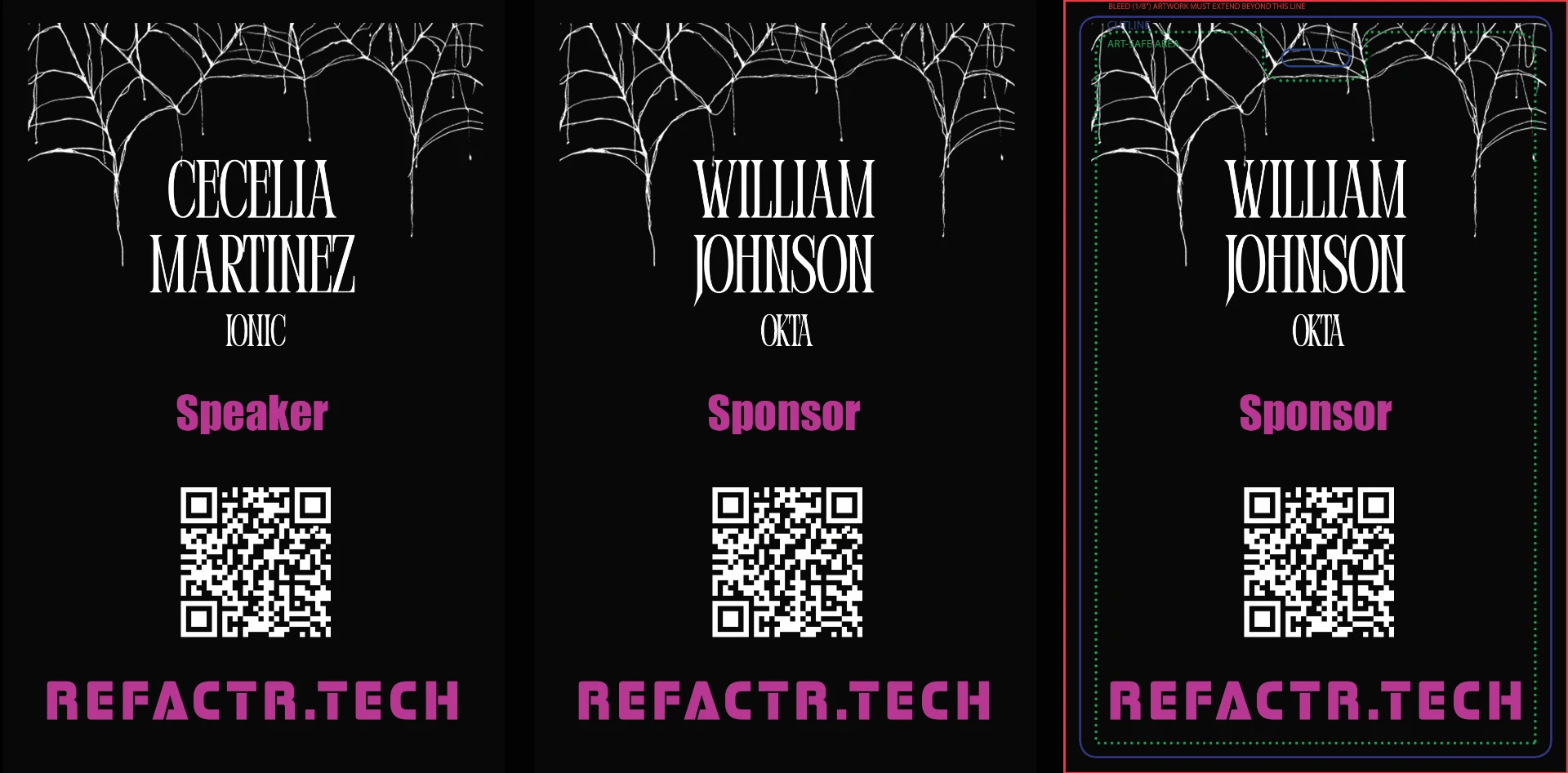
The system proves itself when it runs without me. The 2023 badge set is a CMYK print master at trim size, with a bleed line, a cutline and an art-safe area, and the typeface shipped alongside it. Attendee, Speaker and Sponsor versions come off the same frame, and the 2023 slides ran on a Canva template so the badge was the one piece I designed by hand that year. A volunteer can produce a correct badge without me in the room, and since 2024 the same pipeline has carried promotion for 60+ meetups and community events a year.
When the flagship was retired and REFACTR relaunched as a year-round community, the identity was rebuilt to match. The wordmark that had carried four conferences became a character: a hooded alien with a laptop over the Atlanta skyline, with a written brand guide behind it (Royal Purple, Neon Pink and Celeste, three typefaces, logo rules, minimum sizes). I wrote the brief and directed the designer on the mark and the guide. That's the mark at the top of the Approach section.
What I do myself is the part that keeps it a system. Every recurring series gets its own version of the alien, and I customize each one: a ramen bowl for Bytes & Bites, a book for Code Reading Club, a cocktail for Out of Office Hours, a radar dial for Radar. Same character, same palette, one prop changed, so a member can tell which series a post belongs to before reading a word, and a volunteer can build a graphic for any series without a new design. It is the conference-edition discipline applied to programs instead of years.
The tooling changed with the relaunch too. I use AI image tools to produce the series variants against the brand guide, and Claude Design, with the REFACTR palette and type saved as a project, for event promotion and slides. The guide is what makes that work: the tools generate, the guide decides what ships, and I do the deciding.




Decisions & tradeoffs
Decision 1: Inclusion-as-default vs. inclusion-as-track.
A common pattern is to run a "diversity track" alongside otherwise standard programming. We rejected that model. Inclusion shaped the entire program: the keynotes, the technical tracks, the workshop selection, the speaker support, and the attendee experience. The tradeoff was that every programming decision took longer because it had to clear a higher bar. The upside was a brand that meant something specific instead of being a logo on a generic conference.
Decision 2: Conference-only vs. year-round ecosystem.
For the first several years, the brand was the conference. After the 2023 conference, we evolved into a recurring meetup program, starting low-lift with monthly virtual lunches and growing into regular in-person meetups. That expansion came with different cadences, sponsor conversations, and volunteer demands.
The 2023 edition is the evidence that produced the pivot. It was bootstrapped into a new venue with two rooms, one of them the community space used for breaks and lunch, with no confirmed budget going in. We set the room for about 200 with tables so people could work all day, rather than 300 in theater seating, and it ran close to full. The theme was descoped to what the money could deliver and restored late, once sponsorship closed, only where the confirmed budget reached. Badges, slides and the after-party playlist were being produced anyway, so theming them cost nothing; about a thousand dollars went to decorations in the community room, candy, and shirts for the three organizers. Three of the six touchpoints were free, and the one room that got real spend was the one people were actually in. Then we read the numbers honestly. The conference format had been disrupted three times since 2020 and never re-established a stable baseline, while the meetup model was already compounding. Rebuilding the flagship meant re-proving a format; the meetups didn't. So, at least for now, the flagship was retired.
The shift wasn't only editorial. The post-pandemic sponsorship environment had changed in ways that would have made another large conference financially fragile: many of our pre-pandemic sponsors had funded us through "diversity" budgets, and a meaningful share of those budgets either got cut as the economy tightened or deprioritized at companies where DEI was no longer a strategic line item. We could have chased a smaller version of the same conference model and hoped sponsorship would recover. Instead, we used the moment to deliberately rebuild the program around something less reliant on enterprise tech sponsorship: recurring meetups, smaller-format gatherings, and shared programming with peer organizations.
The same external force that hit our sponsorship pipeline, the broader pullback from DEI as a stated corporate priority, also had implications for how the brand could most durably position itself going forward. The values didn't change; the frame did. Starting in 2025, REFACTR.TECH refocused around a more holistic view of tech: highlighting the powerful and often untold stories that don't usually get airtime, fostering collaboration and thoughtful discussion, and treating career development, mental health, community building, and leadership as part of the technical learning surface rather than adjacent to it. That framing still serves the audience we built the brand for. It's also more durable across cycles than any frame that sits inside a single corporate budget category.
In 2025, we extended the operating model in parallel by partnering with other local Atlanta meetup groups. Each group rotates responsibility for the monthly technical meetup content, sharing programming bandwidth and costs across multiple organizations so no single group has to carry the full month-over-month load alone. The capacity that frees up lets us expand into adjacent formats: in-person lunches, after-work happy hours, movie nights, workshops, and original YouTube content built around the new editorial frame (a Career Stories series surfacing untold paths in tech, plus Hacktoberfest open-source programming) that compound community in ways a single monthly meetup can't. The 2026 programming carries that forward: meetups, panels, and social events spanning intermediate-to-senior technical content alongside beginner-friendly programming.
The editorial reason for the pivot was real: a once-a-year conference, however good, doesn't compound community the way a recurring touchpoint does. The structural reason was equally real: we needed a programming model that wasn't dependent on enterprise sponsorship surviving the next economic cycle. And the framing reason was real too: a brand built around a single category of inclusion language is more exposed to budget-cycle whiplash than a brand built around the broader work of how technical careers, communities, and humans actually develop.
The combined version (recurring touchpoints, partner-shared bandwidth, multi-format programming, and a holistic editorial frame) is more durable than any one of those insights alone, and it converted the brand from "an annual event" into "an ongoing community."
Decision 3: Pandemic-era programming. Holding pattern, virtual pivot, or full pause?
We ran one virtual edition during the pandemic, accepting that a multi-day inclusive technical conference loses a lot of what makes it valuable when it's fully virtual, but choosing to keep the brand active and the community connected rather than pause entirely. That decision shaped what came back: the post-pandemic conferences returned as in-person events with sharper editorial focus, and the eventual meetup pivot was directly informed by what we'd learned about virtual-format community programming.
Decision 4: Brand independence. Partner for ops, don't merge for brand.
There were natural moments where partnering with or being absorbed into a larger conference brand or organization would have been operationally easier. We held brand independence because the entire value of REFACTR.TECH was the editorial point of view, and editorial points of view dilute fast inside a parent brand.
The nuance worth naming: we did take a partnership to keep ops manageable. Connect Events ran our ticketing and payment processing layer. That was the right kind of partnership to take because Connect Events was a logistics partner, not an editorial one. They didn't shape the lineup, the tracks, the speaker mix, or the brand voice.
What we refused was the version of the partnership conversation that came up again and again: "join our umbrella, we'll handle everything." That version always required folding our editorial point of view into someone else's. The framing we landed on, and that I'd carry into any future founder-led brand: partner for ops, don't merge for brand. Operations are commodity infrastructure that benefit from leverage. Editorial point of view is the asset itself, and it can't be borrowed.
The tradeoff: we had to maintain our own brand operations (program committee, speaker support, sponsor narrative, attendee experience standards) without a parent organization to delegate to. The upside: a brand that still means something specific because we never let it dilute.
Decision 5: No theme in year one.
Every REFACTR conference after the first has carried a theme. The first one deliberately didn't. A brand nobody recognizes yet can't afford to be varied, so 2019 shipped the base mark and nothing else, and the theme model started in 2021 once there was something for a theme to vary from. The tradeoff was a plainer first edition. The upside was that when the mark was replaced in 2021 and again in 2022, people still knew whose conference it was.
Decision 6: A capped edition, on purpose, in 2022.
2022 was the first in-person edition after the pandemic, and three decisions suppressed the headline number before a ticket was sold. We capped attendance, targeting under 60 percent of the venue's capacity, because 500 people in a room was more than attendees would have been comfortable with. We honored every ticket sold for the two cancelled 2020 dates, delivering those seats against revenue recognized two years earlier. And we held a vaccination policy knowing some ticket holders would decline to attend rather than comply. The edition landed at roughly 300, which was the target. It is the same trade REFACTR has made more than once: fewer people, or less spectacle, for the experience of the people who came.
Outcome
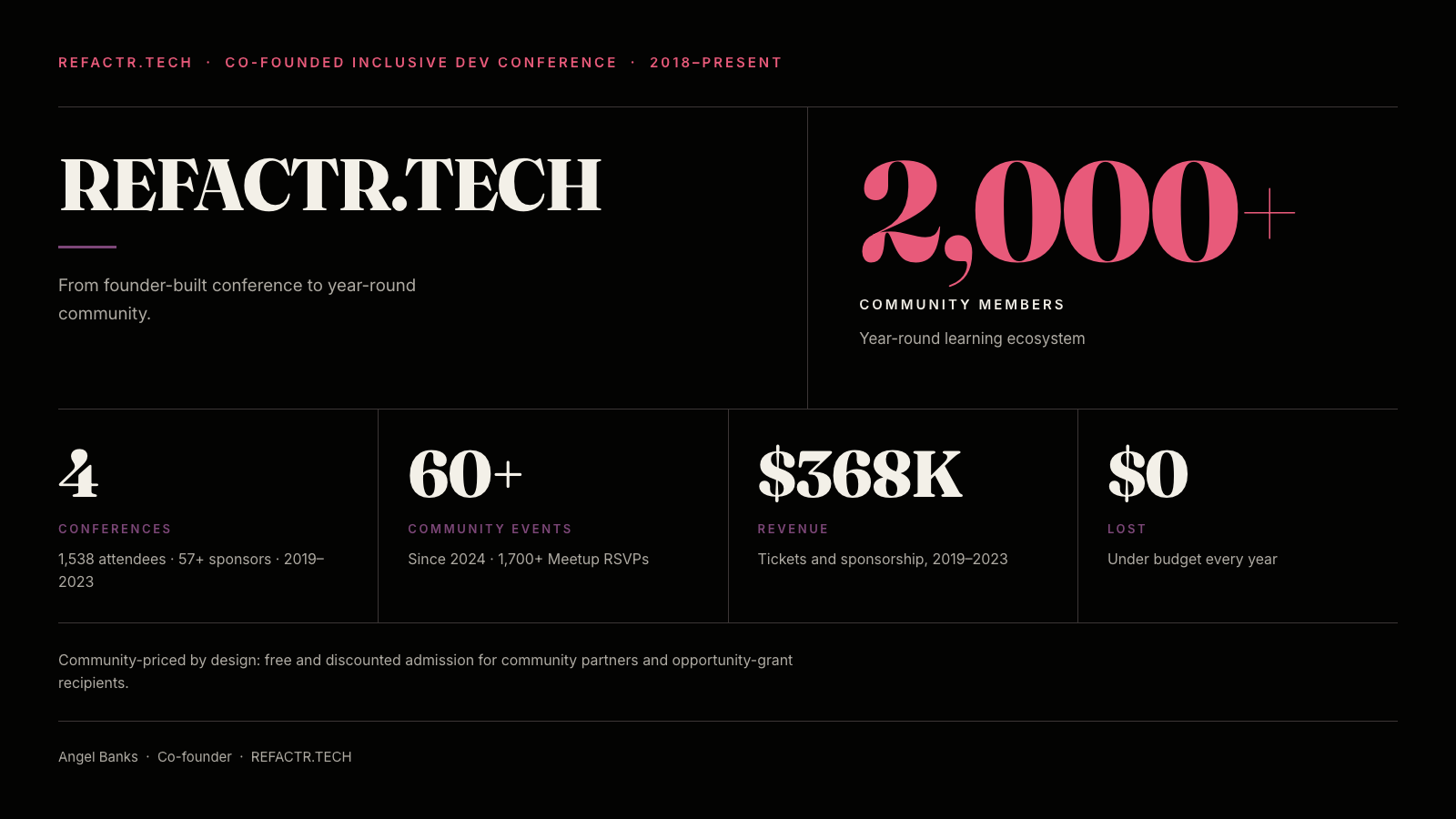
- Four developer conferences delivered between 2019 and 2023: three multi-day, one single-day, including one virtual edition during the pandemic.
- 1,538 combined conference attendees across the four-conference run.
- $368K in combined ticket and sponsorship revenue across the series, on deliberately low ticket prices with free and discounted admission for community partners and opportunity-grant recipients. Under budget every year, never at a loss; the 2019 flagship delivered at $118K against a $150K budget.
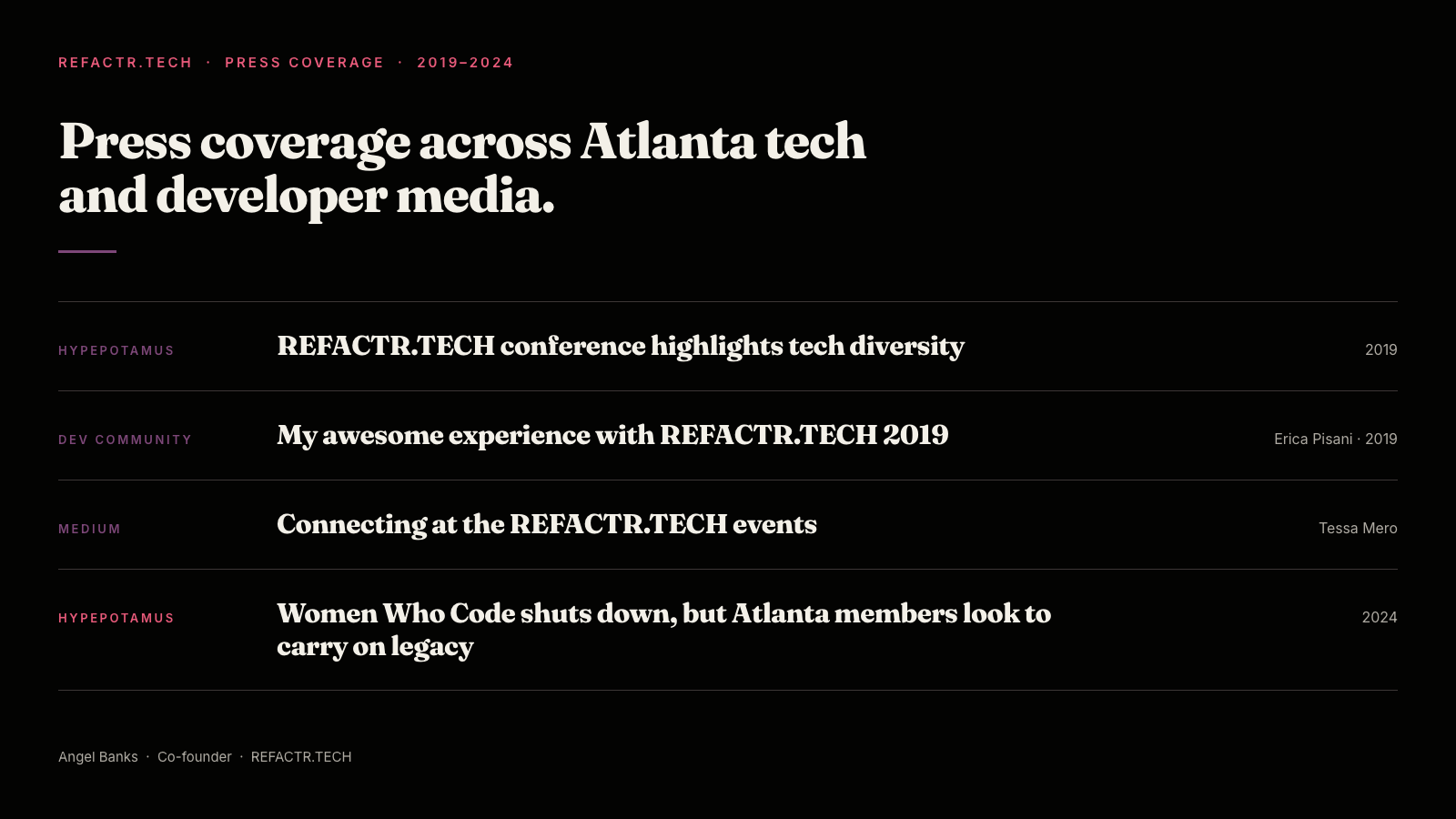
- Sustained press coverage across Atlanta tech and developer media, including:
- Hypepotamus: REFACTR.TECH conference highlights tech diversity
- DEV Community: My awesome experience with REFACTR.TECH 2019 by Erica Pisani
- Medium: Connecting at the REFACTR.TECH events by Tessa Mero
- Hypepotamus: Women Who Code shuts down, but Atlanta members look to carry on legacy. When the global Women Who Code organization announced it was dissolving in April 2024, REFACTR.TECH was named as one of the local Atlanta organizations carrying the legacy forward.
- A YouTube content library at @refactrtech: every conference session recorded and archived from 2019 onward, expanded in 2025 with original series built around the new editorial frame: a Career Stories series surfacing untold paths in tech, Hacktoberfest open-source content, and selected meetup recordings.
- A recurring sponsor and partner roster that returned year over year, the strongest sustainability signal a conference can have.
- A speaker pipeline of underrepresented technical voices who got their first major conference platform at REFACTR.TECH and went on to keynote and speak elsewhere.
- A post-2023 meetup ecosystem with 2,000+ community members, with monthly virtual lunches followed by regular in-person meetups, averaging ~40% RSVP-to-attendance (well above the typical free-meetup benchmark), converting the brand into an ongoing community surface rather than an annual event.
- A 2025 brand evolution: a more holistic framing focused on untold stories in tech, career development, mental health, community building, and leadership, paired with peer-org meetup partnerships across Atlanta. The 2026 program carries that forward across meetups, panels, and social events for both intermediate-to-senior and beginner audiences.
Reflection / What I'd do differently
The thing I'd most want to pass on from REFACTR.TECH is that a conference brand is a long-term editorial bet, not a short-term event business. The value isn't the year you launch. It's the year five, year seven, year ten compounding return on a recognizable, trusted point of view. That changes how you spend founding-year capital: you invest in editorial clarity, repeat partner relationships, and attendee experience, not scale-for-scale's-sake.
The pandemic taught a related lesson: brands survive operating disruption when the editorial point of view is strong enough that "what would REFACTR.TECH do here?" has a clear answer. Brands that are mostly logistics struggle when the logistics get reset. Brands with a real point of view can pause, pivot, and resume without losing what they meant.
A third lesson came later, from the meetup-pivot era: for a small founder-led brand, sustainable operations look less like "do more yourself" and more like "share the load with peer organizations that care about the same audience." The 2025 model, rotating monthly meetup responsibility across multiple Atlanta organizations with each keeping its own brand identity, wasn't just cost-sharing. It converted what would have been a single-org capacity ceiling into a network where no group carries the full operating load alone. That's more resilient than any single org running everything, and it scales without requiring any one brand to grow into a parent organization.
The principle generalizes: when audiences overlap across peer brands, the right move isn't to merge them. It's to network them. That's the same insight as Decision 4's "partner for ops, don't merge for brand," applied one layer up: don't merge for ops or for brand when networking gets you the same leverage without the dilution.
If I were doing this again, I'd:
- Build the year-round community surface earlier. Meetups and workshops compound community in a way an annual conference can't, even if the conference is excellent.
- Document the operating playbook (CFP rubric, sponsor tiers, code of conduct response model, AV checklist, attendee experience standards) earlier so the conference becomes more transferable across volunteer teams over time.
- Invest more heavily in post-event content from year one. A multi-day conference produces talks, hallway moments, and themes that deserve a longer life than the live event. A built-in content track turns the conference into a year-round media surface, not a 72-hour spike.
- Build peer-organization partnerships from year one rather than year six. Bandwidth-sharing across orgs with overlapping audiences was the structural unlock that made the post-conference meetup era sustainable. Treating peer orgs as collaborators from the start would have spread the operating load before it became a constraint and built the network earlier while each org's audience was still growing.